We remain fully operational. Our teams are working around the clock to ensure your deliveries continue safely.

DOWNLOAD THE APP


Copyright © 2025 Desertcart Holdings Limited
DOWNLOAD THE APP
Buy anything from 5,000+ international stores. One checkout price. No surprise fees. Join 2M+ shoppers on Desertcart.
Desertcart purchases this item on your behalf and handles shipping, customs, and support to JORDAN.
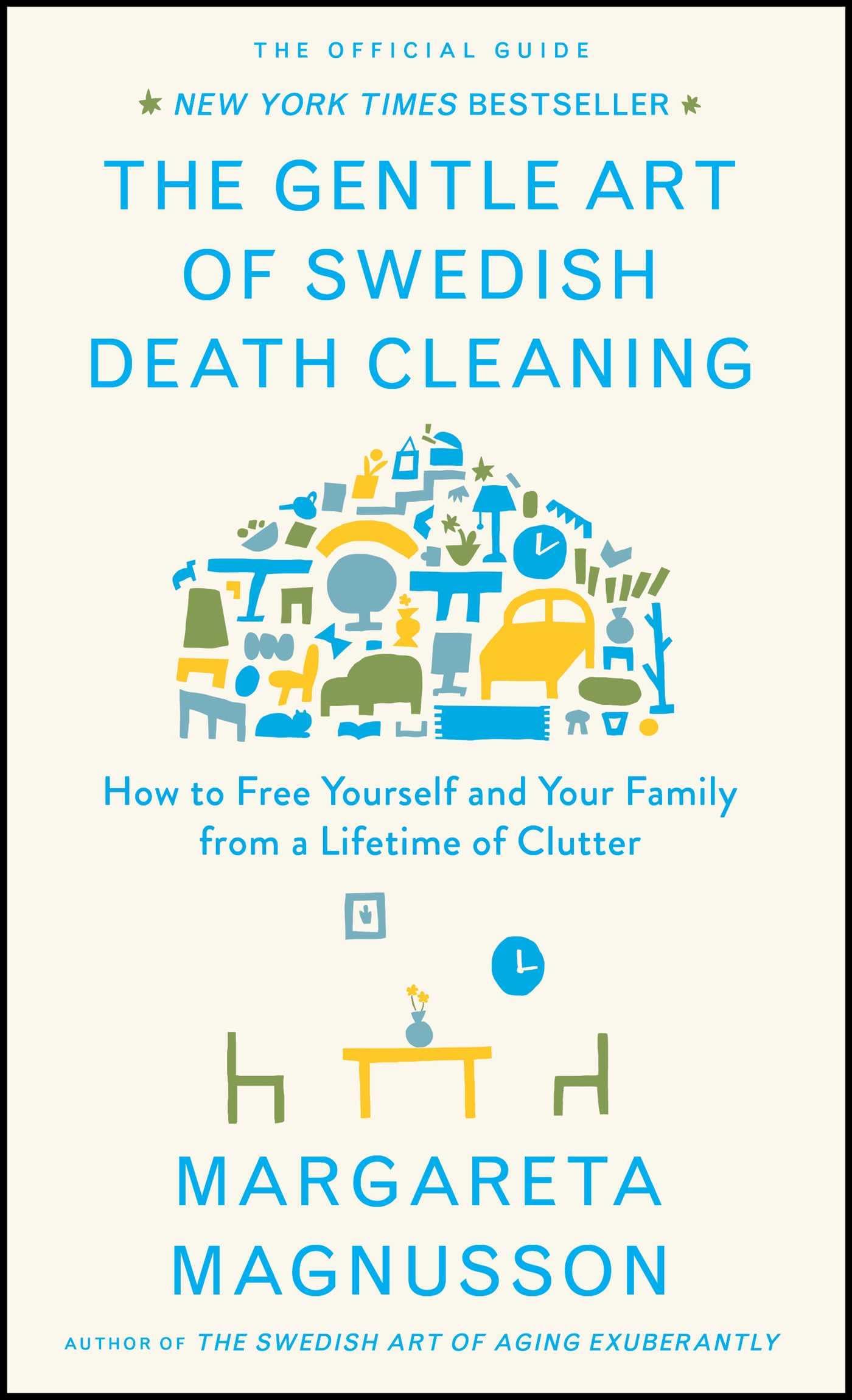
The Gentle Art of Swedish Death Cleaning: How to Free Yourself and Your Family from a Lifetime of Clutter (The Swedish Art of Living & Dying Series) [Magnusson, Margareta] on desertcart.com. *FREE* shipping on qualifying offers. The Gentle Art of Swedish Death Cleaning: How to Free Yourself and Your Family from a Lifetime of Clutter (The Swedish Art of Living & Dying Series) Review: How it makes death cleaning fun!” - Not only is this tiny book full of good advice - it is very, very funny. Puts cleaning out your “stuff” into whole different perspective, it does so with humor. I’ve order 3 more of them to share with fellow senior citizens. Thx for writing it - it will never go “out of fashion!” Review: Found a lot of lessons useful to just have a clean and more clutter free house in general. - I enjoyed the read. The story of the author is impactful and I took some notes on what to prepare for in the future. A great message into the thought process of aging and life and the things we carry with us along the way. External and internal.


| Best Sellers Rank | #3,068 in Books ( See Top 100 in Books ) #3 in Home Cleaning, Caretaking & Relocating #4 in Love & Loss #94 in Motivational Self-Help (Books) |
| Customer Reviews | 4.3 4.3 out of 5 stars (6,810) |
| Dimensions | 5.5 x 0.5 x 8.38 inches |
| ISBN-10 | 1501173243 |
| ISBN-13 | 978-1501173240 |
| Item Weight | 2.31 pounds |
| Language | English |
| Part of series | The Swedish Art of Living & Dying Series |
| Print length | 128 pages |
| Publication date | January 2, 2018 |
| Publisher | Scribner |
M**N
How it makes death cleaning fun!”
Not only is this tiny book full of good advice - it is very, very funny. Puts cleaning out your “stuff” into whole different perspective, it does so with humor. I’ve order 3 more of them to share with fellow senior citizens. Thx for writing it - it will never go “out of fashion!”
D**Y
Found a lot of lessons useful to just have a clean and more clutter free house in general.
I enjoyed the read. The story of the author is impactful and I took some notes on what to prepare for in the future. A great message into the thought process of aging and life and the things we carry with us along the way. External and internal.
T**E
A Must Have for Baby Boomers Resisting Downsizing
Over the past few years I’ve been lecturing to the genealogy community on the topic of what to do with years of family history research and how to pass it on to the next generation. In my own book After You’re Gone: Future Proofing Your Genealogy Research, I review many simple techniques for cleaning out a loved one’s home in order to gather important family history items. So when it was announced that The Gentle Art of Swedish Death Cleaning by Margaret Magnusson was being released, the book went to the top of my “must read” list. And I wasn’t disappointed. So what makes Magnusson’s slim but effective tome different than any one of the other “get organized” books out there? Hers is done with humor and humility and from the perspective that one day each of us will be gone from this earth. And who wants to be remember by their family and friends as a packrat? Or as someone who lived in a house where the camera crew from Hoarders was just outside the window? As the author states in the foreward: “Let me help make your loved ones’ memories of you nice—instead of awful.” What is Death Cleaning? The Swedish term döstädning literally means “death cleaning” in English. And as the author states, “it is a term that means that you remove unnecessary things and make your home nice and orderly when you think the time is coming closer for you to leave the planet.” Simple, right? Actually not as simple as you think. I’ve gone through two major “clean outs” of homes in the past 10 years, and I can tell you that each situation is different and each clean out takes lots of time. Magnusson cuts through the sentimentality that can often bog us down when we set out to do a “purge” of possessions. The author bluntly reminds you that if you are sitting on items that you haven’t looked at in years, would you really miss them? And what is the real value of these items? And more importantly, what legacy are you leaving for your children or grandchildren? Death cleaning according to Magnusson is “about a permanent form of organization that makes your everyday life run more smoothly.” So this isn’t just for those of us in our twilight years . . . anyone who feels burdened by their possessions can benefit from the sage advice found in The Gentle Art of Swedish Death Cleaning. Practice Advice Delivered with Humor Magnusson is “somewhere between 80 and 100 years old” as she states in the About the Author section and much of her advice is based on real experience. She cleaned out her mother’s apartment as well as her mother-in-law’s apartment after their deaths. And she downsized her own large home to fit into a two-bedroom apartment when her own husband died. One touching segment, for me, was when the author discussed finding notes from her mother pinned to specific items. Each note contained advice as to how to dispose of the item and who to contact since they might be interested. This practice provided peace of mind to Magnusson as she sorted through her mother’s possessions. And the funniest segments dealt with finding what the author calls “vice” items such as a block of arsenic (which her father kept on hand during World War II when the Nazis took over much of Europe) or cartons of cigarettes in her grandmother’s linen cabinet where she would sneak a smoke. Magnusson advises that if you have items tucked away that would cause embarrassment or discomfort when found by your loved ones, dispose of them. Or, in the case of a loved one’s collection of “marriage counselors”” keep your favorite one, not all fifteen. Not All Advice Works for Genealogists and Family Historians While I agree with the author on her basic approach to handling family photos and other sentimental items – set them aside to review later and don’t get bogged down in a walk down memory lane or you’ll never accomplish the cleaning – I strongly disagree with some ways of handling these items. Throwing away duplicate photos or images that are out of focus etc. is great, I don’t agree in disposing of photos just because you can’t identify anyone in the picture. As genealogists we know that we have resources to help figure out who is who and when the image was taken even if there are no notes written on the back. In addition, when it comes to salacious stories, letters and diaries, she writes: “Perhaps you have saved letters, documents, or diaries that contain information or family stories you would never wish to embarrass your descendants with. While we seem to live in a culture where everyone thinks they have the right to every secret, I do not agree. If you think the secret will cause your loved ones harm or unhappiness, then make sure to destroy them. Make a bonfire or shove them into the hungry shredder.” Again, I have to disagree. As a family historian my role is to uncover the truth, and then to preserve the truth. There are better ways of handling this type of information: one method I use is to preserve the information, place it into an envelope with instructions on how to handle it (such as release after all living individuals identified in the story have passed), and then store the item with estate planning and other important papers. This way my executor can decide how to handle the items, but they aren’t burned on the trash heap. The Gentle Art of Swedish Death Cleaning – A Great Gift There are several books that I occasionally send to friends and family members, and even colleagues, as a thank you or when they are going through a difficult time in life. If you have parents who should be downsizing, or know a friend who just lost their spouse and needs to go through possessions, the calming advice in The Gentle Art of Swedish Death Cleaning can help remove the sting from such a process. I’m adding this one to my list of my “gifting” books. Conclusion One of the most important pieces of advice from Magnusson, besides performing your own death cleaning NOW, is to discuss the topic with your family members and friends. She notes the Viking tradition of burying objects with the owner when they died: “This was to be sure that the dead would not miss anything in their new environment. It was also an assurance for the family members who remained that they would not become obsessed with spirits of the dead and constantly be reminded of them because their possessions were still scattered all over the tent or mud hut.” I enjoyed reading The Gentle Art of Swedish Death Cleaning by Margaret Magnusson and I intend to put much of the information to good use in 2018 as I downsize my home here in Chicago. One of the main themes in Magnusson’s work is one of generosity: giving away those possessions that have outlived their usefulness in your life and gift them to someone else in need of their functionality. Doing so reminds me of the motto on Peter Bailey’s office wall in the movie It’s a Wonderful Life: “All you can take with you is that which you’ve given away.”
K**I
Philosophical, not practical
This book was not what I was looking for. It is instead a rather philosophical discussion of what "death cleaning" can mean to you and your family. I wanted a practical guide to getting rid of stuff that just sits around taking up space and wrecking any hope for order. I have a lot of that kind of stuff because I seem to have an aversion to throwing anything away. I'm usually certain that I'll immediately want/need it as soon as it's irretrievable. Hardly ever turns out to be true...
J**E
Great book! Has very positive suggestions.
I was told about this from a friend. This is really a very positive book. Easy, light reading. It is about clearing out clutter so when you pass away your family doesn't have so much to get rid of.
A**.
It's not about death, but about peaceful, simple living... and leaving behind fond memories
This book stresses, in a light-hearted way, the importance of sorting through your belongings now so that when you are gone, your children will enjoy fond memories as they look at what you've carefully and thoughtfully chosen to leave behind. Margareta Magnusson charmingly refers to her age as being "between eighty and one hundred years old." She herself has performed many a death cleaning, and she relates each experience in her book. This too is good, because all of us will at one time or another find ourselves in the same shoes. In fact, my husband and I have already had to death clean for his great aunt. We didn't know then that the process had a name, but we did it just the same. Believe me, the fun wore off long before the job was done. The author doesn't tell you exactly how to death clean, but she gives guidelines for how and where to begin--as well as how and where to NOT begin. (For instance, don't begin with photos. You will get bogged down in memories and may never get anything else done.) She encourages you to take your time going through your things. Hold each piece thoughtfully, recollecting the memories that it evokes. Be thankful for the purpose it served in your life, and then let it go--deliberately--finding just the right recipient for your treasure: someone who will appreciate it, who needs it, and who has room for it. Perhaps it is better to sell the item or to give it to a charity, a local library, museum, or other institution. Regardless of where it goes, you are choosing the destination for your possessions with care and love. And, of course, you are throwing away anything that has outlived its usefulness. Margareta stresses that this is not "spring cleaning," for death cleaning goes beyond the purging of things that have lost their usefulness to you. Rather, it is a new mindset, a new way of living. How? Just as you have deliberately decided what will stay and what will go, you also learn to be deliberate in what new things you introduce into your home. You have simplified your life, and now you must keep it simple. Develop a habit of discarding an old item before bringing in a new one. And with everything you keep, know where you want it to go after you die. Make a list to leave behind for your children. For each larger item, you might even want to pin a note onto it to tell them what to do with it. This way, when you are gone--and none of us knows when that will be--you will still be with them, in a way, helping them get through this chore that will be fraught with emotion. Whether or not you consider yourself "old," I highly recommend this book to you. Read it, and begin your death cleaning now. In fact, the earlier you begin, the easier it will be for you--and for those who come behind you.
A**R
A must read book for seekers of simple life, self dependent planners.
K**S
A lovely Swedish lady, aged ‘between 80 and 100’. Her gentle and timely advice is perfect for those who wish to not leave too much trouble to others when they die. The book is not about death! It reminds us that all our stuff can hold us back from enjoying life, it can paralyse us. Not many of us are as wise or as accepting of what is, as this author.
C**N
Bellissime illustrazioni, contenuti interessanti. La lettura è molto rilassante. Consigliatissimo soprattutto per la stagione autunnale e invernale, le cui atmosfere sono evocate e valorizzate nel testo.
A**E
A small, practical guide for decluttering and leaving less job behind.
J**Y
Es un gran libro, con muy buenas ideas y escrito con muy buen humor.
Trustpilot
2 months ago
3 weeks ago