We remain fully operational. Our teams are working around the clock to ensure your deliveries continue safely.

DOWNLOAD THE APP


Copyright © 2025 Desertcart Holdings Limited
DOWNLOAD THE APP


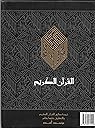
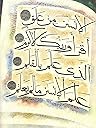
The Message of the Quran: The Full Account of the Revealed Arabic Text Accom : Asad, Muhammad, Moustafa, Ahmed: desertcart.ae: Books Review: Salam-Shalome-Peace be upon you! If there were only 1 translation of the Holy Quran that I could take with me on a desert island, it would be this one. The Message of the Quran is a translation of the Holy Quran by Muhammad Asad (who, interestingly, was a Jew before he became a Muslim), the holy book of Islam which, without the commentary, is about the size of the New Testament. Humanity seems best represented by kindness and gratitude, not to mention faith; but, faith without reason is blind, and, like power, easily corruptible. This is why I like the Quran in general, and Asad's translation in particular: rather than explaining verses through a mid-evil perspective, he skillfully combines the best elements from both the East and the West, allowing the words to shine forth through the light of faith, while, as an extension and at the same time, illuminated by the light of intellectual reason. Hope and love are more powerful than fear and hatred. This copy (The Message of the Qur'an: The full account of the revealed Arabic text accompanied by parallel transliteration (English and Arabic Edition)--and, contrary to what others have said, it has a general index (about 10 pages in length)--is most dear to me because it has three necesary aspects: the translation and commentary, the original Arabic text, and a Roman-alphabet transliteration of the Arabic in to English. Although I am a blind individual (I love the artwork:)!) who reads books electronically, this is one of the very few books that I physically own (and would like to own), deriving pleasure from its mere honorable existence. Its pages feel shiny and glossy; it is written on that private-university textbook paper. The 2003 edition is slightly better than the newer 2008 edition because it is about 2 pounds lighter in weight; subsequently, the 2012 reprint is from the 2003 edition, which also is 4 ppounds as compared to the six pound 2008 printing. The binding for the 2008 text seems as if it will last, but, because of the size and ni6 pound weight of the book, physical care should be taken. All three printings come with a ribbbon (part of the book) that can be used as a bookmark. One thing I must say before hand though: the Quran does not read like the Bible. It talks about a story, deals with the theme and moral, and then moves on to another point. It is very emphatic (I.E., it emphasizes particular themes over and over again, but with a different approach. As compared with the Yusuf Ali translation, Asad's text, which uses brackets (allowing translation-based explications without diverging from the original Arabic meaning to augment the text), is more concise, stressing the fundamental, elemental, and symbolic aspects of the messages of the Quran (sometimes elucidated through juxtaposition [as he points out]), without focusing on the details to the exclusion of all else. Asad's commentary gives reasons and facts (when an opinion of interpretation arises, he, through the use of precedent, gives a logical chain of rationality to explain his viewpoint), rather than laying out, sometimes as does Yusuf Ali, a pattern of incumbent thoughts or actions expressed by "we should" or "they should." In short, Asad's translation relies on reason, elucidation, and concise explication; it provides extensive footnotes, but not in such quantity as to overshadow the original text. For comparison of style, word choice, and commentary (where applicable), see (below) the translations of Chapter 113 (and chapter 1) by A.J. Arberry (who must be commended for his nigh literal translation that flows with poetic grace [it does not use parentheses or brackets]), Yusuf Ali, and Asad, respectively. -------------------- CXIII DAYBREAK In the Name of God, the Merciful, the Compassionate 113:1 Say: 'I take refuge with the Lord of the Daybreak from the evil of what He has created, from the evil of darkness when it gathers, from the evil of the women who blow on knots, 113:5 from the evil of an envier when he envies.' -------------------- Yusuf Ali 113: This early Makkan Surah provides the antidote to superstition and fear by teaching us to seek refuge in Allah from every kind of ill arising from outer nature and from dark and evil plottings and envy on the part of others. C.293 (The running Commentary, in Rhythmic Prose) It is Allah Who brings forth light from darkness, life and activity from death, spiritual Enlightenment from ignorance and superstition Banish fear, and trust His Providence No danger, then, from the outer world, No secret plottings from perverted wills, No disturbance of your happiness or good Can affect the fortress of your inmost soul. 1. Say: I seek refuge with the Lord of the Dawn, 2. From the mischief of created things; 3. From the mischief of Darkness as it overspreads; 4. From the mischief of those who practice Secret Arts; 5. And from the mischief of the envious one as he practices envy. C6301. In Allah's created world, there are all kinds of forces and counter-forces, especially those put in motion by beings who have been endowed with some sort of will. The forces of good may be compared to light, and those of evil to darkness. Allah can cleave the depths of darkness and produce light (6:96), and therefore we should cast off fear and take refuge in divine guidance and goodness. C6302. Falaq is the Dawn or Daybreak, the cleaving of darkness and the manifestation of light. This may be understood in various senses: 1. literally, when the darkness of the night is at its worst, rays of light pierce through and produce the dawn; 2. when the darkness of ignorance is at its worst, the light of Allah pierces through the soul and gives it enlightenment: (24:35); 3. non-existence is darkness, and life and activity may be typified by light. C6303. See n. 6301 above. Our trust in Allah is the refuge from every kind of fear and superstition, every kind of danger and evil. Three special kinds of mischief are specified in the next three verses, against which our best guard is our trust in Allah, the Light of the heavens and the earth. They are: 1. physical dangers, typified by darkness. 2. physical dangers within us, typified by Secret Arts, and 3. physical dangers from without us, resulting from a perverted will, which seeks to destroy any good that we enjoy. C6304. The darkness of the night, physical darkness, is a good type of physical dangers and difficulties. Many people are afraid of physical darkness, and all are afraid of physical injuries, accidents, and calamities. We should not fear, but having taken reasonable precautions, trust in Allah. C6305. Those (feminine) who blow on knots', this having been a favourite form of witchcraft practised by perverted women. Such secret arts cause psychological terror. They may be what is called magic, or secre plottings, or the display of false and seductive charms (3:14), or the spreading of false and secret rumours or slanders to frighten men or deter them from right action. There is fraud in such things, but men are swayed by it. They should cast off fear and do their duty. C6306. Malignant envy, translated into action, seeks to destroy the happiness or the material or spiritual good enjoyed by other people. The best guard against it is trust in Allah with purity of heart. -------------------- Muhammad Asad: The Hundred-Thirteenth Surah Al-Falaq (The Rising Dawn) Mecca Period WHEREAS most of the commentators assign this and the next surah to the early part of the Mecca period, some authorities (e.g., Razi, Ibn Kathir) consider them to have been revealed at Medina, while yet others (e.g., Baghawi, Zamakhshari, Baydawi) leave the question open. On the basis of the scant evidence available to us it appears probable that both these surahs are of early Meccan origin. In The Name of God, The Most Gracious, The Dispenser of Grace: 113:1 SAY: "I seek refuge with the Sustainer of the rising dawn,1 (2) "from the evil of aught that He has created, (3) "and from the evil of the black darkness whenever it descends,2 (4) "and from the evil of all human beings bent on occult endeavours,3 (5) "and from the evil of the envious when he envies."4 1 The term al-falaq ("the light of dawn" or "the rising dawn") is often used tropically to describe "the emergence of the truth after [a period of] uncertainty" (Taj al-'Arus): hence, the appellation "Sustainer of the rising dawn" implies that God is the source of all cognition of truth, and that one's "seeking refuge" with Him is synonymous with striving after truth. 2 I.e., the darkness of despair, or of approaching death. In all these four verses (2-5), the term "evil" (sharr) has not only an objective but also a subjective connotation - namely, fear of evil. 3 Lit., "of those that blow (an-naffathat) upon knots": an idiomatic phrase current in pre-Islamic Arabia and, hence, employed in classical Arabic to designate all supposedly occult endeavours; it was probably derived from the practice of "witches" and "sorcerers" who used to tie a string into a number of knots while blowing upon them and murmuring magic incantations. The feminine gender of naffathat does not, as Zamakhshari and Razi point out, necessarily indicate "women", but may well relate to "human beings" (anfus, sing. nafs, a noun that is grammatically feminine). In his explanation of the above verse, Zamakhshari categorically rejects all belief in the reality and effectiveness of such practices, as well as of the concept of "magic" as such. Similar views have been expressed - albeit in a much more elaborate manner, on the basis of established psychological findings - by Muhammad Abduh and Rashid Rida (see Manar I, 398 ff.). The reason why the believer is enjoined to "seek refuge with God" from such practices despite their palpable irrationality is - according to Zamakhshari- to be found in the inherent sinfulness of such endeavours (see surah 2, note 84), and in the mental danger in which they may involve their author. 4 I.e., from the effects - moral and social- which another person's envy may have on one's life, as well as from succumbing oneself to the evil of envy. In this connection, Zamakhshari quotes a saying of the Caliph Umar ibn Abd al-Aziz (called "the Second Umar" on account of his piety and integrity): "I cannot think of any wrongdoer (zalim) who is more likely to be the wronged one (mazlum) than he who envies another." -------------------- -------------------- I THE OPENING(Arberry) In the Name of God, the Merciful, the Compassionate 1 Praise belongs to God, the Lord of all Being, the All-merciful, the All-compassionate, the Master of the Day of Doom. 5 Thee only we serve; to Thee alone we pray for succour. Guide us in the straight path, the path of those whom Thou hast blessed, not of those against whom Thou art wrathful, nor of those who are astray. -------------------- SURA 1. Fatiha, or the Opening Chapter. (Yusuf Ali) 1. In the name of Allah, Most Gracious, Most Merciful. 2. Praise be to Allah, The Cherisher and Sustainer of the Worlds; 3. Most Gracious, Most Merciful; 4. Master of the Day of Judgment. 5. Thee do we worship, and Thine aid we seek. 6. Show us the straight way, 7. The way of those on whom Thou hast bestowed Thy Grace, Those whose (portion) is not wrath, and who go not astray. Introduction and Summary C.42 - The running Commentary, in Rhythmic Prose First comes that beautiful Surah, 15. Each chapter or portion of the Quran is called a Surah, which means a Degree Or Step, by which we mount up. Sometimes whole Surahs were revealed, and sometimes portions, which were arranged under the Prophet's directions. Some Surahs are long, and some are short, but a logical thread runs through them all. Each verse of the Surah is called an Ayah (plural, Ayat), which means also a sign. A verse of revelation is a Sign of Allah's beautiful handiwork in the material creation or His dealings in history are signs to us, if we would understand. Some Ayat are long, and some are short. The Ayah is the true unit of the Quran. The Opening Chapter of Seven Verses, 16. Fatihah: Opening Chapter. 17. These seven verses form a complete unit by themselves, and are recited in every prayer and on many other occasions. Cf. 15:87. Rightly called the Essence of the Book. It teaches us the perfect Prayer. For if we can pray aright, it means That we have some knowledge of Allah And His attributes, of His relations To us and His creation, which includes Ourselves; that we glimpse the source From which we come, and that final goalWhich is our spiritual destiny Under Allah's' true Judgement: then We offer ourselves to Allah and seek His light. C.43 Prayer is the heart of Religion and Faith But how shall we pray? What words shall convey The yearnings of our miserable ignorant hearts To the Knower of all? It is worthy of Him Or of our spiritual nature to ask For vanities, or even for such physical needs As our daily bread? The Inspired One Taught us a Prayer that sums up our faith, Our hope, and our aspiration in things that matter. We think in devotion of Allah's name and His Nature; We praise Him for His creation and His Cherishing care; We call to mind the Realities, seen and unseen; We offer Him worship and ask His guidance; And we know the straight from the crooked path By the light of His grace that illumines the righteous. 18. By universal consent it is rightly placed at the beginning of the Koran as summing up in marvelously terse and comprehensive words, man's relation to Allah in contemplation and prayer. In our spiritual contemplation the first words should be those of praise If the praise is from our inmost being, it brings us closer to Allah. Then our eyes see all good, peace, and harmony. Evil, rebellion, and conflict are purged out. They do not exist for us, for our eyes are lifted up above them in praise. Then we see Allah's attributes better (verses 2-4). This leads us to the attitude of worship and acknowledgment (verse 5). And finally comes prayer for guidance, and a contemplation of what guidance means (verses 6-7). Allah needs no praise, for He is above all praise; He needs no petition, for He knows our needs better than we do ourselves; and His bounties are open without asking, to the righteous and the sinner alike. The prayer is primarily for our own spiritual education consolation, and confirmation. That is why the words in this Sura are given to us in the form in which we should utter them. 19. The Arabic words "Rahman" and "Rahim " translated "Most Gracious" and "Most Merciful" are both intensive forms referring to different aspects of Allah's attribute of Mercy. The Arabic intensive is more suited to express Allah's attributes than the superlative degree in English. The latter implies a comparison with other beings, or with other times or places, while there is no being like unto Allah. Mercy may imply pity. longsuffering, patience, and forgiveness, all of which the sinner needs and Allah Most Merciful bestows in abundant measure. But there is a Mercy that goes before even the need arises, the Grace which is ever watchful. and flows from Allah Most Gracious to all His creatures, protecting them, preserving them, guiding them, and leading them to clear light and higher life. Opinion is divided whether the Bismillah should be numbered as a separate verse or not. It is unanimously agreed that it is a part of the Koran in Sura An-Naml. Therefore it is better to give it an independent number in the first Sura. For subsequent Suras it is treated as an introduction or head-line, and therefore not numbered. 20. The Arabic word 'Rabb', usually translated Lord, has also the meaning of cherishing, sustaining, bringing to maturity. Allah cares for all the worlds He has created. 21. On realizing in our souls Allah's love and care. His grace and mercy, and His power and justice (as Ruler of the Day of Judgment), the immediate result is that we bend in the act of worship, and see both our shortcomings and His all-sufficient power. The emphatic form means that not only do we reach the position of worshipping Allah and asking for His help, but we worship Him alone and ask for His aid only. For there is none other than He worthy of our devotion and able to help us. The plural "we" indicates that we associate ourselves with all who seek Allah, thus strengthening ourselves and strengthening them in a fellowship of faith. 22. If we translate by the English word "guide", we shall have to say: Guide us to and in the straight Way". For we may he wandering aimlessly, and the first step is to find the way; and the second need is to keep in the Way: our own wisdom may fail in either case. The straight Way is often the narrow Way, or the steep Way, which many people shun (Sura 90:11). By the world's perversity the straight Way is sometimes stigmatized and the crooked Way praised. How are we to judge? We must ask for Allah's guidance. With a little spiritual insight we shall see which are the people who walk in the light of Allah's grace, and which are those that walk in the darkness of Wrath. This also would help our judgment. 23. Note that the words relating to Grace are connected actively with Allah: those relating to Wrath are impersonal. In the one case Allah's Mercy encompasses us beyond our deserts In the other case our own actions are responsible for the Wrath,-the negative of Grace, Peace, or Harmony. 24. Are there two categories?-Those who are in the darkness of Wrath and those who stray? The first are those who deliberately break Allah's law; the second those who stray out of carelessness or negligence. Both are responsible for their own acts or omissions. In opposition to both are the people who are in the light of Allah's Grace: for His Grace not only protects them from active wrong (if they will only submit their will to Him) but also from straying into paths of temptation or carelessness. The negative 'gair' should be construed as applying not to the way, but as describing men protected from two dangers by Allah's Grace. -------------------- The First Surah Al-Fatihah (The Opening) Mecca Period THIS SURAH is also called Fatihat al-Kitab ("The Opening of the Divine Writ"), Umm alKitab ("The Essence of the Divine Writ"), Surat al-Hamd ("The Surah of Praise"), Asas alQur'an ("The Foundation of the Qur'an"), and is known by several other names as well. It is mentioned elsewhere in the Qur'an as As-Sab' al-Mathani ("The Seven Oft-Repeated [Verses]") because it is repeated several times in the course of each of the five daily prayers. According to Bukhari, the designation Umm al-Kitab was given to it by the Prophet himself, and this in view of the fact that it contains, in a condensed form, all the fundamental principles laid down in the Qur'an: the principle of God's oneness and uniqueness, of His being the originator and fosterer of the universe, the fount of all life-giving grace, the One to whom man is ultimately responsible, the only power that can really guide and help; the call to righteous action in the life of this world ("guide us the straight way"); the principle of life after death and of the organic consequences of man's actions and behaviour (expressed in the term "Day of Judgment"); the principle of guidance through God's message-bearers (evident in the reference to "those upon whom God has bestowed His blessings") and, flowing from it, the principle of the continuity of all true religions (implied in the allusion to people who have lived - and erred - in the past); and, finally, the need for voluntary self-surrender to the will of the Supreme Being and, thus, for worshipping Him alone. It is for this reason that this surah has been formulated as a prayer, to be constantly repeated and reflected upon by the believer. "The Opening" was one of the earliest revelations bestowed upon the Prophet. Some authorities (for instance, 'Ali ibn Abi Talib) were even of the opinion that it was the very first revelation; but this view is contradicted by authentic Traditions quoted by both Bukhari and Muslim, which unmistakably show that the first five verses of surah 96 ("The Germ-Cell") constituted the beginning of revelation. It is probable, however, that whereas the earlier revelations consisted of only a few verses each, "The Opening" was the first surah revealed to the Prophet in its entirety at one time: and this would explain the view held by 'Ali. 1:1 In the name of God, The Most Gracious, The Dispenser of Grace:1 1:2 ALL PRAISE is due to God alone, the Sustainer of all the worlds,2 (1:3) the Most Gracious, the Dispenser of Grace, (1:4) Lord of the Day of Judgment! 1:5 Thee alone do we worship; and unto Thee alone do we turn for aid. 1:6 Guide us the straight way (1:7) the way of those upon whom Thou hast bestowed Thy blessings,3 not of those who have been condemned [by Thee], nor of those who go astray!4 1 According to most of the authorities, this invocation (which occurs at the beginning of every surah with the exception of surah 9) constitutes an integral part of "The Opening" and is, therefore, numbered as verse 1. In all other instances, the invocation "in the name of God" precedes the surah as such, and is not counted among its verses. - Both the divine epithets rahman and rahim are derived from the noun rahmah, which signifies "mercy", "compassion", "loving tenderness" and, more comprehensively, "grace". From the very earliest times, Islamic scholars have endeavoured to define the exact shades of meaning which differentiate the two terms. The best and simplest of these explanations is undoubtedly the one advanced by Ibn al-Qayyim (as quoted in Manar I,48): the term rahman circumscribes the quality of abounding grace inherent in, and inseparable from, the concept of God's Being, whereas rahim expresses the manifestation of that grace in, and its effect upon, His creation - in other words, an aspect of His activity. 2 In this instance, the term "worlds" denotes all categories of existence both in the physical and the spiritual sense. The Arabic expression rabb - rendered by me as "Sustainer" embraces a wide complex of meanings not easily expressed by a single term in another language. It comprises the ideas of having a just claim to the possession of anything and, consequently, authority over it, as well as of rearing, sustaining and fostering anything from its inception to its final completion. Thus, the head of a family is called rabb ad-dar ("master of the house") because he has authority over it and is responsible for its maintenance; similarly, his wife is called rabbat ad-dar ("mistress of the house"). Preceded by the definite article al, the designation rabb is applied, in the Qur'an, exclusively to God as the sole fosterer and sustainer of all creation - objective as well as conceptual - and therefore the ultimate source of all authority. 3 i.e., by vouchsafing to them prophetic guidance and enabling them to avail themselves thereof. 4 According to almost all the commentators, God's "condemnation" (ghadab, lit., "wrath") is synonymous with the evil consequences which man brings upon himself by wilfully rejecting God's guidance and acting contrary to His injunctions. Some commentators (e.g., Zamakhshari) interpret this passage as follows: "... the way of those upon whom Thou hast bestowed Thy blessings - those who have not been condemned [by Thee], and who do not go astray": in other words, they regard the last two expressions as defining "those upon whom Thou hast bestowed Thy blessings". Other commentators (e.g., Baghawi and Ibn Kathir) do not subscribe to this interpretation - which would imply the use of negative definitions - and understand the last verse of the surah in the manner rendered by me above. As regards the two categories of people following a wrong course, some of the greatest Islamic thinkers (e.g., Al-Ghazali or, in recent times, Muhammad 'Abduh) held the view that the people described as having incurred "God's condemnation" - that is, having deprived themselves of His grace - are those who have become fully cognizant of God's message and, having understood it, have rejected it; while by "those who go astray" are meant people whom the truth has either not reached at all, or to whom it has come in so garbled and corrupted a form as to make it difficult for them to recognize it as the truth (see 'Abduh in Manar 1,68 ff.). Review: For whomever it may help...I just want to simply state...wow!!!!! this translation of the Quran is indeed perfect as far as I am concerned. I had used N.J. Dawood's translation for most of my life and obviously I was really loving that one as well, but after purchasing this book, it is like something very hard to describe...utterly amazing and enlightening and awesome. I wish he (the author) was still alive so I could personally thank him for what he has done with this work!!! The efforts and time and work that he must have put into this must have been unreal...everything is all there: explanations, notes, and his thoughts on things, and I know that what he is writing is indeed the real truth. I can not highly recommend this highly enough...and the fact that it is a wonderful largish hard-cover with lovely caligraphy and such a big heavy solid (QUALITY) feel to it...the sense of religious feeling and elation and pride of ownership and a solemn "wow" feeling every time I open it (it is like having one of those huge real arabic qurans that would be in a mosque in arabia, like on a stand) I simply love this book!!!!! Best thing I have done for my religious advancement for a long time is to get this book. One last note: I did not ever imagine or think that simply another translation by someone would make all that much difference in how I perceive and understand and comprehend and fathom the message and meaning and content of the quran, but indeed it really does!!! It is almost in a way with this book like I am reading a whole new and amazing book, and every day the new feelings and insights and enlightening knowledge by God enters into my self life and being like a miraculous new revelation and miracle and grace from God. I am so happy that I got it...wow, all thanks and praise and glory to our Lord and Sustainer and Creator. And much thanks to the author for all of his time and efforts and work spent making such a glorious and beautiful and (most of all) TRUE!!!!! accurate and well -explained translation of God's revelation to mankind.
| Customer reviews | 4.7 4.7 out of 5 stars (163) |
| Dimensions | 19.05 x 5.72 x 24.13 cm |
| Edition | Revised |
| ISBN-10 | 1904510353 |
| ISBN-13 | 978-1904510352 |
| Item weight | 2.54 Kilograms |
| Language | Arabic, English |
| Print length | 1210 pages |
| Publication date | 30 July 2009 |
| Publisher | The Book Foundation |
S**N
Salam-Shalome-Peace be upon you! If there were only 1 translation of the Holy Quran that I could take with me on a desert island, it would be this one. The Message of the Quran is a translation of the Holy Quran by Muhammad Asad (who, interestingly, was a Jew before he became a Muslim), the holy book of Islam which, without the commentary, is about the size of the New Testament. Humanity seems best represented by kindness and gratitude, not to mention faith; but, faith without reason is blind, and, like power, easily corruptible. This is why I like the Quran in general, and Asad's translation in particular: rather than explaining verses through a mid-evil perspective, he skillfully combines the best elements from both the East and the West, allowing the words to shine forth through the light of faith, while, as an extension and at the same time, illuminated by the light of intellectual reason. Hope and love are more powerful than fear and hatred. This copy (The Message of the Qur'an: The full account of the revealed Arabic text accompanied by parallel transliteration (English and Arabic Edition)--and, contrary to what others have said, it has a general index (about 10 pages in length)--is most dear to me because it has three necesary aspects: the translation and commentary, the original Arabic text, and a Roman-alphabet transliteration of the Arabic in to English. Although I am a blind individual (I love the artwork:)!) who reads books electronically, this is one of the very few books that I physically own (and would like to own), deriving pleasure from its mere honorable existence. Its pages feel shiny and glossy; it is written on that private-university textbook paper. The 2003 edition is slightly better than the newer 2008 edition because it is about 2 pounds lighter in weight; subsequently, the 2012 reprint is from the 2003 edition, which also is 4 ppounds as compared to the six pound 2008 printing. The binding for the 2008 text seems as if it will last, but, because of the size and ni6 pound weight of the book, physical care should be taken. All three printings come with a ribbbon (part of the book) that can be used as a bookmark. One thing I must say before hand though: the Quran does not read like the Bible. It talks about a story, deals with the theme and moral, and then moves on to another point. It is very emphatic (I.E., it emphasizes particular themes over and over again, but with a different approach. As compared with the Yusuf Ali translation, Asad's text, which uses brackets (allowing translation-based explications without diverging from the original Arabic meaning to augment the text), is more concise, stressing the fundamental, elemental, and symbolic aspects of the messages of the Quran (sometimes elucidated through juxtaposition [as he points out]), without focusing on the details to the exclusion of all else. Asad's commentary gives reasons and facts (when an opinion of interpretation arises, he, through the use of precedent, gives a logical chain of rationality to explain his viewpoint), rather than laying out, sometimes as does Yusuf Ali, a pattern of incumbent thoughts or actions expressed by "we should" or "they should." In short, Asad's translation relies on reason, elucidation, and concise explication; it provides extensive footnotes, but not in such quantity as to overshadow the original text. For comparison of style, word choice, and commentary (where applicable), see (below) the translations of Chapter 113 (and chapter 1) by A.J. Arberry (who must be commended for his nigh literal translation that flows with poetic grace [it does not use parentheses or brackets]), Yusuf Ali, and Asad, respectively. -------------------- CXIII DAYBREAK In the Name of God, the Merciful, the Compassionate 113:1 Say: 'I take refuge with the Lord of the Daybreak from the evil of what He has created, from the evil of darkness when it gathers, from the evil of the women who blow on knots, 113:5 from the evil of an envier when he envies.' -------------------- Yusuf Ali 113: This early Makkan Surah provides the antidote to superstition and fear by teaching us to seek refuge in Allah from every kind of ill arising from outer nature and from dark and evil plottings and envy on the part of others. C.293 (The running Commentary, in Rhythmic Prose) It is Allah Who brings forth light from darkness, life and activity from death, spiritual Enlightenment from ignorance and superstition Banish fear, and trust His Providence No danger, then, from the outer world, No secret plottings from perverted wills, No disturbance of your happiness or good Can affect the fortress of your inmost soul. 1. Say: I seek refuge with the Lord of the Dawn, 2. From the mischief of created things; 3. From the mischief of Darkness as it overspreads; 4. From the mischief of those who practice Secret Arts; 5. And from the mischief of the envious one as he practices envy. C6301. In Allah's created world, there are all kinds of forces and counter-forces, especially those put in motion by beings who have been endowed with some sort of will. The forces of good may be compared to light, and those of evil to darkness. Allah can cleave the depths of darkness and produce light (6:96), and therefore we should cast off fear and take refuge in divine guidance and goodness. C6302. Falaq is the Dawn or Daybreak, the cleaving of darkness and the manifestation of light. This may be understood in various senses: 1. literally, when the darkness of the night is at its worst, rays of light pierce through and produce the dawn; 2. when the darkness of ignorance is at its worst, the light of Allah pierces through the soul and gives it enlightenment: (24:35); 3. non-existence is darkness, and life and activity may be typified by light. C6303. See n. 6301 above. Our trust in Allah is the refuge from every kind of fear and superstition, every kind of danger and evil. Three special kinds of mischief are specified in the next three verses, against which our best guard is our trust in Allah, the Light of the heavens and the earth. They are: 1. physical dangers, typified by darkness. 2. physical dangers within us, typified by Secret Arts, and 3. physical dangers from without us, resulting from a perverted will, which seeks to destroy any good that we enjoy. C6304. The darkness of the night, physical darkness, is a good type of physical dangers and difficulties. Many people are afraid of physical darkness, and all are afraid of physical injuries, accidents, and calamities. We should not fear, but having taken reasonable precautions, trust in Allah. C6305. Those (feminine) who blow on knots', this having been a favourite form of witchcraft practised by perverted women. Such secret arts cause psychological terror. They may be what is called magic, or secre plottings, or the display of false and seductive charms (3:14), or the spreading of false and secret rumours or slanders to frighten men or deter them from right action. There is fraud in such things, but men are swayed by it. They should cast off fear and do their duty. C6306. Malignant envy, translated into action, seeks to destroy the happiness or the material or spiritual good enjoyed by other people. The best guard against it is trust in Allah with purity of heart. -------------------- Muhammad Asad: The Hundred-Thirteenth Surah Al-Falaq (The Rising Dawn) Mecca Period WHEREAS most of the commentators assign this and the next surah to the early part of the Mecca period, some authorities (e.g., Razi, Ibn Kathir) consider them to have been revealed at Medina, while yet others (e.g., Baghawi, Zamakhshari, Baydawi) leave the question open. On the basis of the scant evidence available to us it appears probable that both these surahs are of early Meccan origin. In The Name of God, The Most Gracious, The Dispenser of Grace: 113:1 SAY: "I seek refuge with the Sustainer of the rising dawn,1 (2) "from the evil of aught that He has created, (3) "and from the evil of the black darkness whenever it descends,2 (4) "and from the evil of all human beings bent on occult endeavours,3 (5) "and from the evil of the envious when he envies."4 1 The term al-falaq ("the light of dawn" or "the rising dawn") is often used tropically to describe "the emergence of the truth after [a period of] uncertainty" (Taj al-'Arus): hence, the appellation "Sustainer of the rising dawn" implies that God is the source of all cognition of truth, and that one's "seeking refuge" with Him is synonymous with striving after truth. 2 I.e., the darkness of despair, or of approaching death. In all these four verses (2-5), the term "evil" (sharr) has not only an objective but also a subjective connotation - namely, fear of evil. 3 Lit., "of those that blow (an-naffathat) upon knots": an idiomatic phrase current in pre-Islamic Arabia and, hence, employed in classical Arabic to designate all supposedly occult endeavours; it was probably derived from the practice of "witches" and "sorcerers" who used to tie a string into a number of knots while blowing upon them and murmuring magic incantations. The feminine gender of naffathat does not, as Zamakhshari and Razi point out, necessarily indicate "women", but may well relate to "human beings" (anfus, sing. nafs, a noun that is grammatically feminine). In his explanation of the above verse, Zamakhshari categorically rejects all belief in the reality and effectiveness of such practices, as well as of the concept of "magic" as such. Similar views have been expressed - albeit in a much more elaborate manner, on the basis of established psychological findings - by Muhammad Abduh and Rashid Rida (see Manar I, 398 ff.). The reason why the believer is enjoined to "seek refuge with God" from such practices despite their palpable irrationality is - according to Zamakhshari- to be found in the inherent sinfulness of such endeavours (see surah 2, note 84), and in the mental danger in which they may involve their author. 4 I.e., from the effects - moral and social- which another person's envy may have on one's life, as well as from succumbing oneself to the evil of envy. In this connection, Zamakhshari quotes a saying of the Caliph Umar ibn Abd al-Aziz (called "the Second Umar" on account of his piety and integrity): "I cannot think of any wrongdoer (zalim) who is more likely to be the wronged one (mazlum) than he who envies another." -------------------- -------------------- I THE OPENING(Arberry) In the Name of God, the Merciful, the Compassionate 1 Praise belongs to God, the Lord of all Being, the All-merciful, the All-compassionate, the Master of the Day of Doom. 5 Thee only we serve; to Thee alone we pray for succour. Guide us in the straight path, the path of those whom Thou hast blessed, not of those against whom Thou art wrathful, nor of those who are astray. -------------------- SURA 1. Fatiha, or the Opening Chapter. (Yusuf Ali) 1. In the name of Allah, Most Gracious, Most Merciful. 2. Praise be to Allah, The Cherisher and Sustainer of the Worlds; 3. Most Gracious, Most Merciful; 4. Master of the Day of Judgment. 5. Thee do we worship, and Thine aid we seek. 6. Show us the straight way, 7. The way of those on whom Thou hast bestowed Thy Grace, Those whose (portion) is not wrath, and who go not astray. Introduction and Summary C.42 - The running Commentary, in Rhythmic Prose First comes that beautiful Surah, 15. Each chapter or portion of the Quran is called a Surah, which means a Degree Or Step, by which we mount up. Sometimes whole Surahs were revealed, and sometimes portions, which were arranged under the Prophet's directions. Some Surahs are long, and some are short, but a logical thread runs through them all. Each verse of the Surah is called an Ayah (plural, Ayat), which means also a sign. A verse of revelation is a Sign of Allah's beautiful handiwork in the material creation or His dealings in history are signs to us, if we would understand. Some Ayat are long, and some are short. The Ayah is the true unit of the Quran. The Opening Chapter of Seven Verses, 16. Fatihah: Opening Chapter. 17. These seven verses form a complete unit by themselves, and are recited in every prayer and on many other occasions. Cf. 15:87. Rightly called the Essence of the Book. It teaches us the perfect Prayer. For if we can pray aright, it means That we have some knowledge of Allah And His attributes, of His relations To us and His creation, which includes Ourselves; that we glimpse the source From which we come, and that final goalWhich is our spiritual destiny Under Allah's' true Judgement: then We offer ourselves to Allah and seek His light. C.43 Prayer is the heart of Religion and Faith But how shall we pray? What words shall convey The yearnings of our miserable ignorant hearts To the Knower of all? It is worthy of Him Or of our spiritual nature to ask For vanities, or even for such physical needs As our daily bread? The Inspired One Taught us a Prayer that sums up our faith, Our hope, and our aspiration in things that matter. We think in devotion of Allah's name and His Nature; We praise Him for His creation and His Cherishing care; We call to mind the Realities, seen and unseen; We offer Him worship and ask His guidance; And we know the straight from the crooked path By the light of His grace that illumines the righteous. 18. By universal consent it is rightly placed at the beginning of the Koran as summing up in marvelously terse and comprehensive words, man's relation to Allah in contemplation and prayer. In our spiritual contemplation the first words should be those of praise If the praise is from our inmost being, it brings us closer to Allah. Then our eyes see all good, peace, and harmony. Evil, rebellion, and conflict are purged out. They do not exist for us, for our eyes are lifted up above them in praise. Then we see Allah's attributes better (verses 2-4). This leads us to the attitude of worship and acknowledgment (verse 5). And finally comes prayer for guidance, and a contemplation of what guidance means (verses 6-7). Allah needs no praise, for He is above all praise; He needs no petition, for He knows our needs better than we do ourselves; and His bounties are open without asking, to the righteous and the sinner alike. The prayer is primarily for our own spiritual education consolation, and confirmation. That is why the words in this Sura are given to us in the form in which we should utter them. 19. The Arabic words "Rahman" and "Rahim " translated "Most Gracious" and "Most Merciful" are both intensive forms referring to different aspects of Allah's attribute of Mercy. The Arabic intensive is more suited to express Allah's attributes than the superlative degree in English. The latter implies a comparison with other beings, or with other times or places, while there is no being like unto Allah. Mercy may imply pity. longsuffering, patience, and forgiveness, all of which the sinner needs and Allah Most Merciful bestows in abundant measure. But there is a Mercy that goes before even the need arises, the Grace which is ever watchful. and flows from Allah Most Gracious to all His creatures, protecting them, preserving them, guiding them, and leading them to clear light and higher life. Opinion is divided whether the Bismillah should be numbered as a separate verse or not. It is unanimously agreed that it is a part of the Koran in Sura An-Naml. Therefore it is better to give it an independent number in the first Sura. For subsequent Suras it is treated as an introduction or head-line, and therefore not numbered. 20. The Arabic word 'Rabb', usually translated Lord, has also the meaning of cherishing, sustaining, bringing to maturity. Allah cares for all the worlds He has created. 21. On realizing in our souls Allah's love and care. His grace and mercy, and His power and justice (as Ruler of the Day of Judgment), the immediate result is that we bend in the act of worship, and see both our shortcomings and His all-sufficient power. The emphatic form means that not only do we reach the position of worshipping Allah and asking for His help, but we worship Him alone and ask for His aid only. For there is none other than He worthy of our devotion and able to help us. The plural "we" indicates that we associate ourselves with all who seek Allah, thus strengthening ourselves and strengthening them in a fellowship of faith. 22. If we translate by the English word "guide", we shall have to say: Guide us to and in the straight Way". For we may he wandering aimlessly, and the first step is to find the way; and the second need is to keep in the Way: our own wisdom may fail in either case. The straight Way is often the narrow Way, or the steep Way, which many people shun (Sura 90:11). By the world's perversity the straight Way is sometimes stigmatized and the crooked Way praised. How are we to judge? We must ask for Allah's guidance. With a little spiritual insight we shall see which are the people who walk in the light of Allah's grace, and which are those that walk in the darkness of Wrath. This also would help our judgment. 23. Note that the words relating to Grace are connected actively with Allah: those relating to Wrath are impersonal. In the one case Allah's Mercy encompasses us beyond our deserts In the other case our own actions are responsible for the Wrath,-the negative of Grace, Peace, or Harmony. 24. Are there two categories?-Those who are in the darkness of Wrath and those who stray? The first are those who deliberately break Allah's law; the second those who stray out of carelessness or negligence. Both are responsible for their own acts or omissions. In opposition to both are the people who are in the light of Allah's Grace: for His Grace not only protects them from active wrong (if they will only submit their will to Him) but also from straying into paths of temptation or carelessness. The negative 'gair' should be construed as applying not to the way, but as describing men protected from two dangers by Allah's Grace. -------------------- The First Surah Al-Fatihah (The Opening) Mecca Period THIS SURAH is also called Fatihat al-Kitab ("The Opening of the Divine Writ"), Umm alKitab ("The Essence of the Divine Writ"), Surat al-Hamd ("The Surah of Praise"), Asas alQur'an ("The Foundation of the Qur'an"), and is known by several other names as well. It is mentioned elsewhere in the Qur'an as As-Sab' al-Mathani ("The Seven Oft-Repeated [Verses]") because it is repeated several times in the course of each of the five daily prayers. According to Bukhari, the designation Umm al-Kitab was given to it by the Prophet himself, and this in view of the fact that it contains, in a condensed form, all the fundamental principles laid down in the Qur'an: the principle of God's oneness and uniqueness, of His being the originator and fosterer of the universe, the fount of all life-giving grace, the One to whom man is ultimately responsible, the only power that can really guide and help; the call to righteous action in the life of this world ("guide us the straight way"); the principle of life after death and of the organic consequences of man's actions and behaviour (expressed in the term "Day of Judgment"); the principle of guidance through God's message-bearers (evident in the reference to "those upon whom God has bestowed His blessings") and, flowing from it, the principle of the continuity of all true religions (implied in the allusion to people who have lived - and erred - in the past); and, finally, the need for voluntary self-surrender to the will of the Supreme Being and, thus, for worshipping Him alone. It is for this reason that this surah has been formulated as a prayer, to be constantly repeated and reflected upon by the believer. "The Opening" was one of the earliest revelations bestowed upon the Prophet. Some authorities (for instance, 'Ali ibn Abi Talib) were even of the opinion that it was the very first revelation; but this view is contradicted by authentic Traditions quoted by both Bukhari and Muslim, which unmistakably show that the first five verses of surah 96 ("The Germ-Cell") constituted the beginning of revelation. It is probable, however, that whereas the earlier revelations consisted of only a few verses each, "The Opening" was the first surah revealed to the Prophet in its entirety at one time: and this would explain the view held by 'Ali. 1:1 In the name of God, The Most Gracious, The Dispenser of Grace:1 1:2 ALL PRAISE is due to God alone, the Sustainer of all the worlds,2 (1:3) the Most Gracious, the Dispenser of Grace, (1:4) Lord of the Day of Judgment! 1:5 Thee alone do we worship; and unto Thee alone do we turn for aid. 1:6 Guide us the straight way (1:7) the way of those upon whom Thou hast bestowed Thy blessings,3 not of those who have been condemned [by Thee], nor of those who go astray!4 1 According to most of the authorities, this invocation (which occurs at the beginning of every surah with the exception of surah 9) constitutes an integral part of "The Opening" and is, therefore, numbered as verse 1. In all other instances, the invocation "in the name of God" precedes the surah as such, and is not counted among its verses. - Both the divine epithets rahman and rahim are derived from the noun rahmah, which signifies "mercy", "compassion", "loving tenderness" and, more comprehensively, "grace". From the very earliest times, Islamic scholars have endeavoured to define the exact shades of meaning which differentiate the two terms. The best and simplest of these explanations is undoubtedly the one advanced by Ibn al-Qayyim (as quoted in Manar I,48): the term rahman circumscribes the quality of abounding grace inherent in, and inseparable from, the concept of God's Being, whereas rahim expresses the manifestation of that grace in, and its effect upon, His creation - in other words, an aspect of His activity. 2 In this instance, the term "worlds" denotes all categories of existence both in the physical and the spiritual sense. The Arabic expression rabb - rendered by me as "Sustainer" embraces a wide complex of meanings not easily expressed by a single term in another language. It comprises the ideas of having a just claim to the possession of anything and, consequently, authority over it, as well as of rearing, sustaining and fostering anything from its inception to its final completion. Thus, the head of a family is called rabb ad-dar ("master of the house") because he has authority over it and is responsible for its maintenance; similarly, his wife is called rabbat ad-dar ("mistress of the house"). Preceded by the definite article al, the designation rabb is applied, in the Qur'an, exclusively to God as the sole fosterer and sustainer of all creation - objective as well as conceptual - and therefore the ultimate source of all authority. 3 i.e., by vouchsafing to them prophetic guidance and enabling them to avail themselves thereof. 4 According to almost all the commentators, God's "condemnation" (ghadab, lit., "wrath") is synonymous with the evil consequences which man brings upon himself by wilfully rejecting God's guidance and acting contrary to His injunctions. Some commentators (e.g., Zamakhshari) interpret this passage as follows: "... the way of those upon whom Thou hast bestowed Thy blessings - those who have not been condemned [by Thee], and who do not go astray": in other words, they regard the last two expressions as defining "those upon whom Thou hast bestowed Thy blessings". Other commentators (e.g., Baghawi and Ibn Kathir) do not subscribe to this interpretation - which would imply the use of negative definitions - and understand the last verse of the surah in the manner rendered by me above. As regards the two categories of people following a wrong course, some of the greatest Islamic thinkers (e.g., Al-Ghazali or, in recent times, Muhammad 'Abduh) held the view that the people described as having incurred "God's condemnation" - that is, having deprived themselves of His grace - are those who have become fully cognizant of God's message and, having understood it, have rejected it; while by "those who go astray" are meant people whom the truth has either not reached at all, or to whom it has come in so garbled and corrupted a form as to make it difficult for them to recognize it as the truth (see 'Abduh in Manar 1,68 ff.).
A**R
For whomever it may help...I just want to simply state...wow!!!!! this translation of the Quran is indeed perfect as far as I am concerned. I had used N.J. Dawood's translation for most of my life and obviously I was really loving that one as well, but after purchasing this book, it is like something very hard to describe...utterly amazing and enlightening and awesome. I wish he (the author) was still alive so I could personally thank him for what he has done with this work!!! The efforts and time and work that he must have put into this must have been unreal...everything is all there: explanations, notes, and his thoughts on things, and I know that what he is writing is indeed the real truth. I can not highly recommend this highly enough...and the fact that it is a wonderful largish hard-cover with lovely caligraphy and such a big heavy solid (QUALITY) feel to it...the sense of religious feeling and elation and pride of ownership and a solemn "wow" feeling every time I open it (it is like having one of those huge real arabic qurans that would be in a mosque in arabia, like on a stand) I simply love this book!!!!! Best thing I have done for my religious advancement for a long time is to get this book. One last note: I did not ever imagine or think that simply another translation by someone would make all that much difference in how I perceive and understand and comprehend and fathom the message and meaning and content of the quran, but indeed it really does!!! It is almost in a way with this book like I am reading a whole new and amazing book, and every day the new feelings and insights and enlightening knowledge by God enters into my self life and being like a miraculous new revelation and miracle and grace from God. I am so happy that I got it...wow, all thanks and praise and glory to our Lord and Sustainer and Creator. And much thanks to the author for all of his time and efforts and work spent making such a glorious and beautiful and (most of all) TRUE!!!!! accurate and well -explained translation of God's revelation to mankind.
A**D
la meilleur traduction parait il. Et cela semble l'être. cela permet d'avoir une vision plus " juste" de ce qui a été et doit revenir l'Islam de nos jours. ça fait un peu bosser l'anglais...
I**A
Muhammad Asad was a remarkable man. I recommend reading his epic life story book called Road to Mecca which explains his journey to Islam and subsequent travels. He lived with bedouins and learned arabic from them which had little influence from modernity at the time of his life.... He acknowledges that The Holy Quran is difficult to translate in terms of limitations of the translated language in question to bring out the rich meaning of the Quranic word e.g. taqwa is translated as fear of God by many translators but he translates it as God consciousness which he justifies by explaining this is the condition of the soul required which manifests in awareness of His Omnipresence which has many effects on ones outlook on life including fear of God in not going astray and protecting oneself from a state of sin. His explanation of original arabic root words makes rationale sense and is fascinating. It is easy to read and beautifully compiled together in this compilation with beautiful arabic calligraphy and transliteration which is great for those who struggle with reading from the Quranic arabic text. . I have read many translations and tafsirs ...all have their unique strengths but for for me, Muhammad Asads is the best ...most accurate as one can be in the choice of translated words, meaning and historical context as well as bring out relevance of the message to our times... I also like that he makes reference to some of the traditional commentators of the Holy Quran such as Ibn Kathir and Zamaqshari who is considered as one of the best linguists of the Quran during the middle ages...even Al Ghazali who was a critic of the philosophical school he came from highly regarded his work and recognised that it should still be studied for his prestine linguistic skills in bringing the meaning of The Holy Quran. I am on my second reading of Muhammad Asads translation and tafsir and continue to be enlightened. Indeed I have bought copies as gifts for others. In this google era of so much misinformation and misinterpretations related to Islam, I highly recommend this to muslims and people of other faiths or no faiths who wish to understand the message of The Holy Quran in it's truest essence.
U**S
Muhammad Asad's translation is the best when it comes to English, in my opinion. And when you add to that the explanatory notes which act as a brief tafsir on certain ambiguous points, combined with the beauty and quality of the physical product itself... You really need this in your house, whether a Muslim or just someone interested in why the Quran is a book revered by a quarter of the Earth's population. I recommend reading every word from the start, including Muhammad Asad's preface and all his notes. It makes for a more fulfilling experience. A note on his style of translation. He prefers translation based on understanding, rather than translation based on literal wording, the latter often leaving a feeling of confusion in the reader. This focus in shift is what sets this translation apart from the rest - but do not fear, because where Asad does depart from the literal text, he leaves a footnote as to what the original would be. Anyone who has ever attempted to read the Quran but found aspects confusing - you NEED this, please do not be put off by price, this is a gem and I'm even surprised this is sold at £30 given the quality of product. If anyone is interested in how an Austrian Jew by the name of Leopold Weiss went on to become the great Muslim scholar, Muhammad Asad, then read his autobiography "The Road to Mecca", an incredible journey that would have been his magnum opus in its own right were it not for this ground-breaking work.
Trustpilot
1 month ago
3 weeks ago